Agroecology & Plant-Microbiome Interactions
There is increased awareness that soil life and plant symbionts play a key role in natural and agricultural ecosystems. Soils, and the astonishing biotic diversity they harbour, provide a number of important services to humans, such as supplying nutrients to crops, storing and cleaning water, and by degrading pesticides and chemicals. Microbes play an essential role in this endeavour. Microbes represent the unseen majority of life on Earth and are essential for plant growth and the functioning of terrestrial ecosystems. Microbes colonize almost any substrate on Earth and associate with humans, insects, plants and soils. By doing to microbes form highly diverse and complex communities that are organised into so-called microbiomes.
Recent work, including our own, showed that soil biodiversity and especially microbiome richness and composition is of pivotal importance for natural and agricultural systems and promotes ecosystem functioning and multifunctionality1-4. There is now increased recognition that plant microbiomes and communities of soil biota can be managed to improve plant productivity and agro-ecosystem sustainability. Our research bridges “Agroecology” and “Plant-Microbiome-Interactions” and aims to merge basic questions centred around plant-microbiome interactions and using this knowledge to understand ecosystem functioning and to promote or keep high plant productivity in agro-ecosystems with minimal impact on the environment.
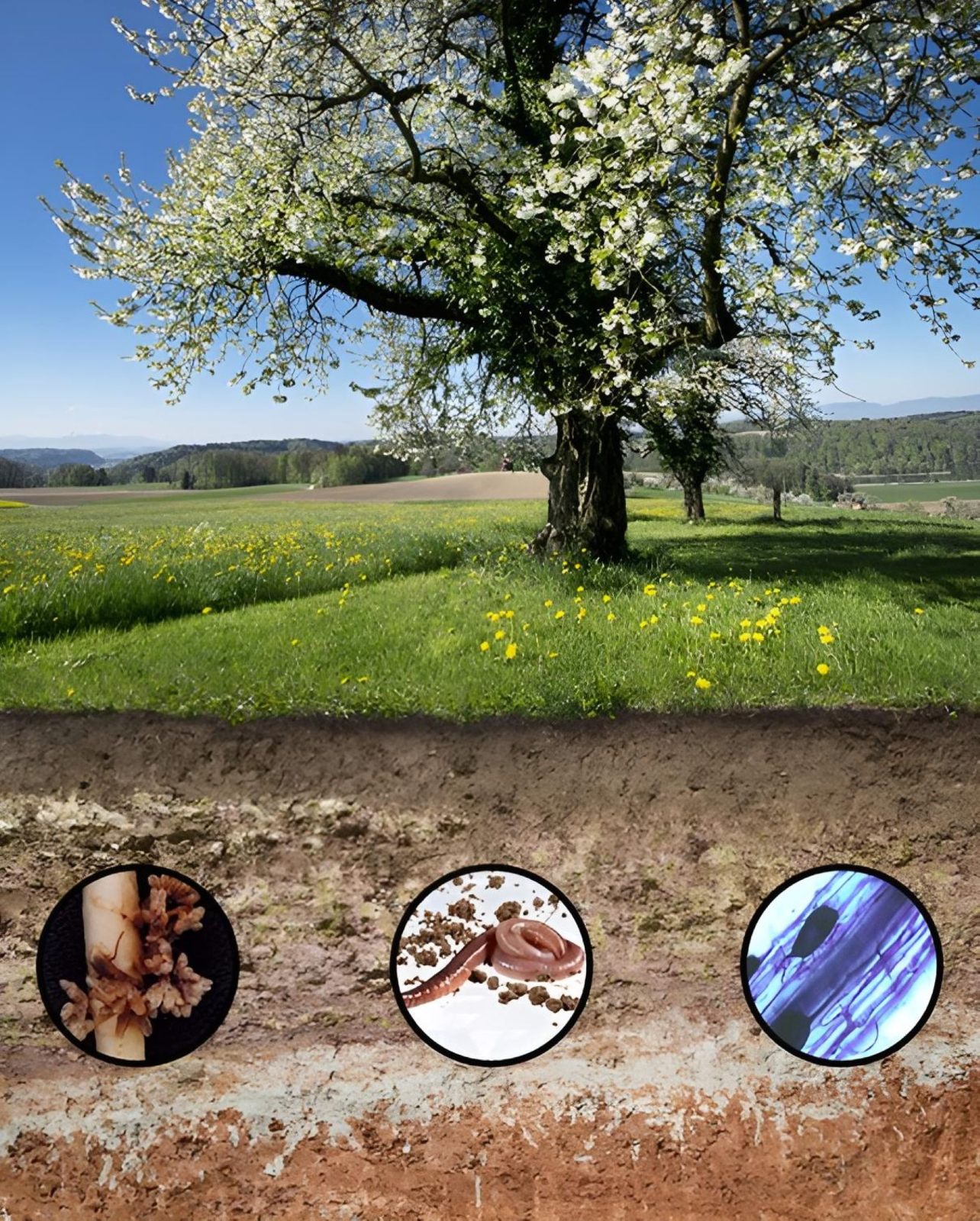
We investigate how soil microorganisms such as mycorrhizal fungi (right), nitrogen fixing bacteria (left), earthworms (middle) and a wide range of other microbes influence plant growth and ecosystem functioning.
Agroecology
We study the impact of land use and agricultural management (e.g. conventional, organic and conservation agriculture) on plant yield, yield stability, biodiversity and a range environmental and ecological factors including nutrient cycling, soil life, soil multifunctionality and microbial communities.
The aim of this work is to develop and design productive and sustainable farming systems using soil ecological engineering and microbiome management, including field inoculation with beneficial mycorrhizal fungi.
This research topic has a strong applied component and a wide range of experiments are performed in the field, especially the farming systems and tillage experiment (the FAST trial, Figure 1) where we compare the effects of organic, conventional and conservation agriculture on plant yield, biodiversity and ecosystem multifunctionality (see first overview publication by Wittwer et al. (2021).
In addition, we have established a field trial where we test the effects of compost application on soil health and plant yield. We also have established various networks of farmer fields where the effects of particular management practices (organic farming, crop diversification, compost application, vegetable farming) on soil life and ecosystem multifunctionality are investigated. In recent years we have started to assess the impact of pesticides (also called plant protection products) on soil life and soil functioning. We observed up to 20 different synthetic pesticides after 20 years of organic management (e.g. management without synthetic pesticide application). Some soil biota like arbuscular mycorrhizal fungi appear to be negatively affected by pesticides, while other soil biota are unaffected or even degrade pesticides and use it as carbon source. In future studies, we investigate the potential ecological risks of pesticides.
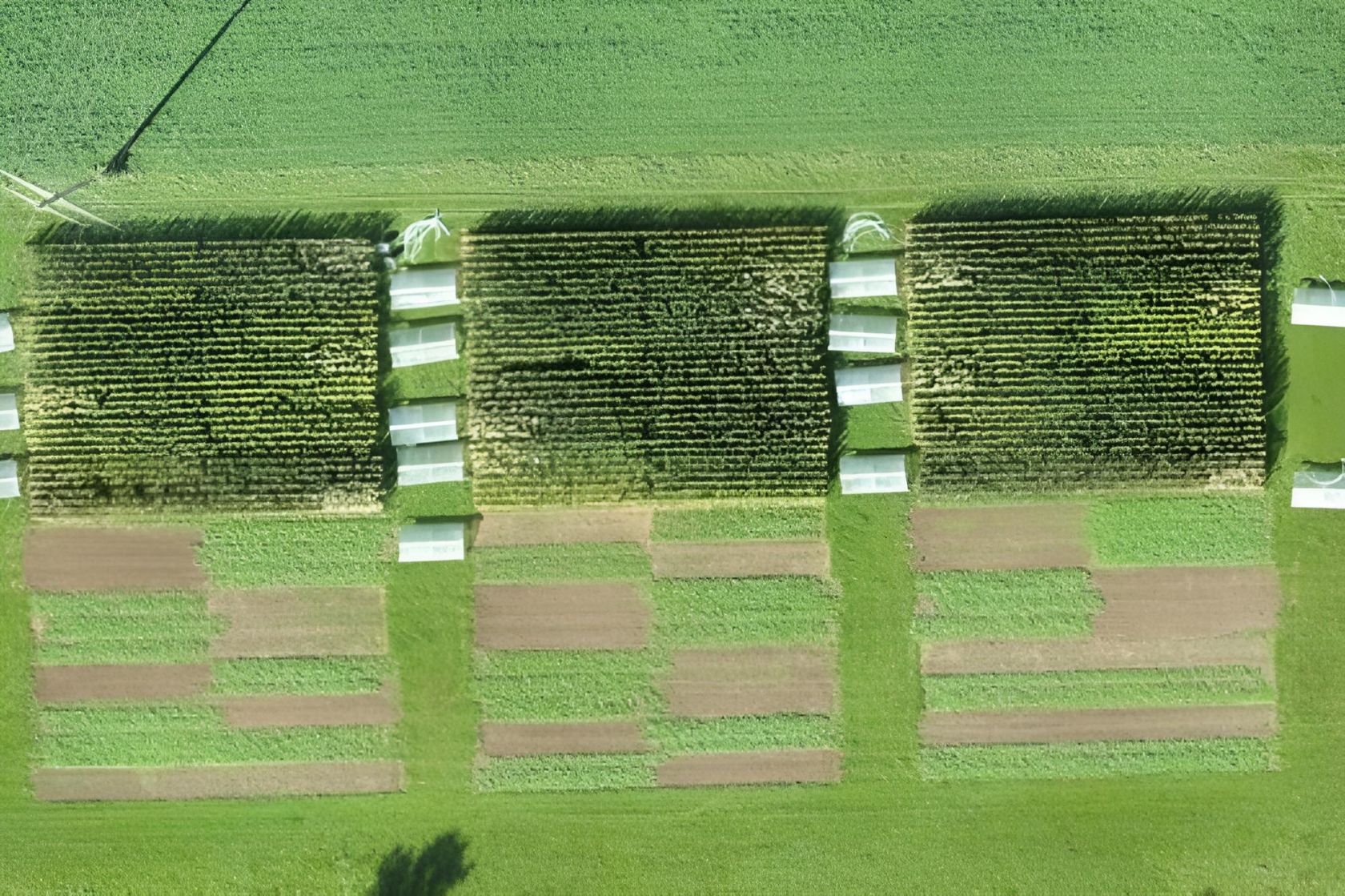
Agroecology: The farming systems and Tillage experiment at Agroscope. In this experiment, we investigate the agronomic, environmental and economic performance of the main Swiss arable farming systems (organic agriculture, conventional agricultural and conservation agriculture with reduced (organic systems) or no tillage (conventional systems where herbicides (e.g. glyphosate) are used to control weeds)). Together with a wide range of partners we investigate the effects of these arable farming systems on plant yield, soil biodiversity, soil and root microbiomes, nutrient cycling, soil erosion, soil structure, global warming potential, soil carbon sequestration, disease suppressiveness. Photo Raphael Wittwer.
Plant-Microbiome-Interaction
Plants interact with a myriad of micro-organisms, several of these are beneficial. It is our goal to understand how plant microbiomes functions and how changes in underground microbial communities influence plant growth and a range of ecosystem functions. In controlled experiments we manipulate microbial composition and diversity, and test how change in plant and soil microbiome influence plant productivity. This work builds upon earlier work we performed with arbuscular mycorrhizal fungi, widespread plant symbionts that form symbiotic associations with the majority of land plants (see Figure 2). In these
earlier experiments we showed that the presence and diversity of arbuscular mycorrhizal fungi promote plant productivity and ecosystem multifunctionality (Figure 3). Currently, we also perform field experiments to test whether inoculation with beneficial arbuscular mycorrhizal fungi can improve sustainable plant production (Figure 4).
In these earlier experiments we showed that the presence and diversity of arbuscular mycorrhizal fungi promote plant productivity and ecosystem multifunctionality (Figure 3).
Moreover, we observed that arbuscular mycorrhizal fungi and rhizobia bacteria can act synergisticly by supplying different nutrients to plants and supporting plant productivity. Currently, we also perform field experiments to test whether inoculation with beneficial soil fungi can improve sustainable plant production (Figure 4).
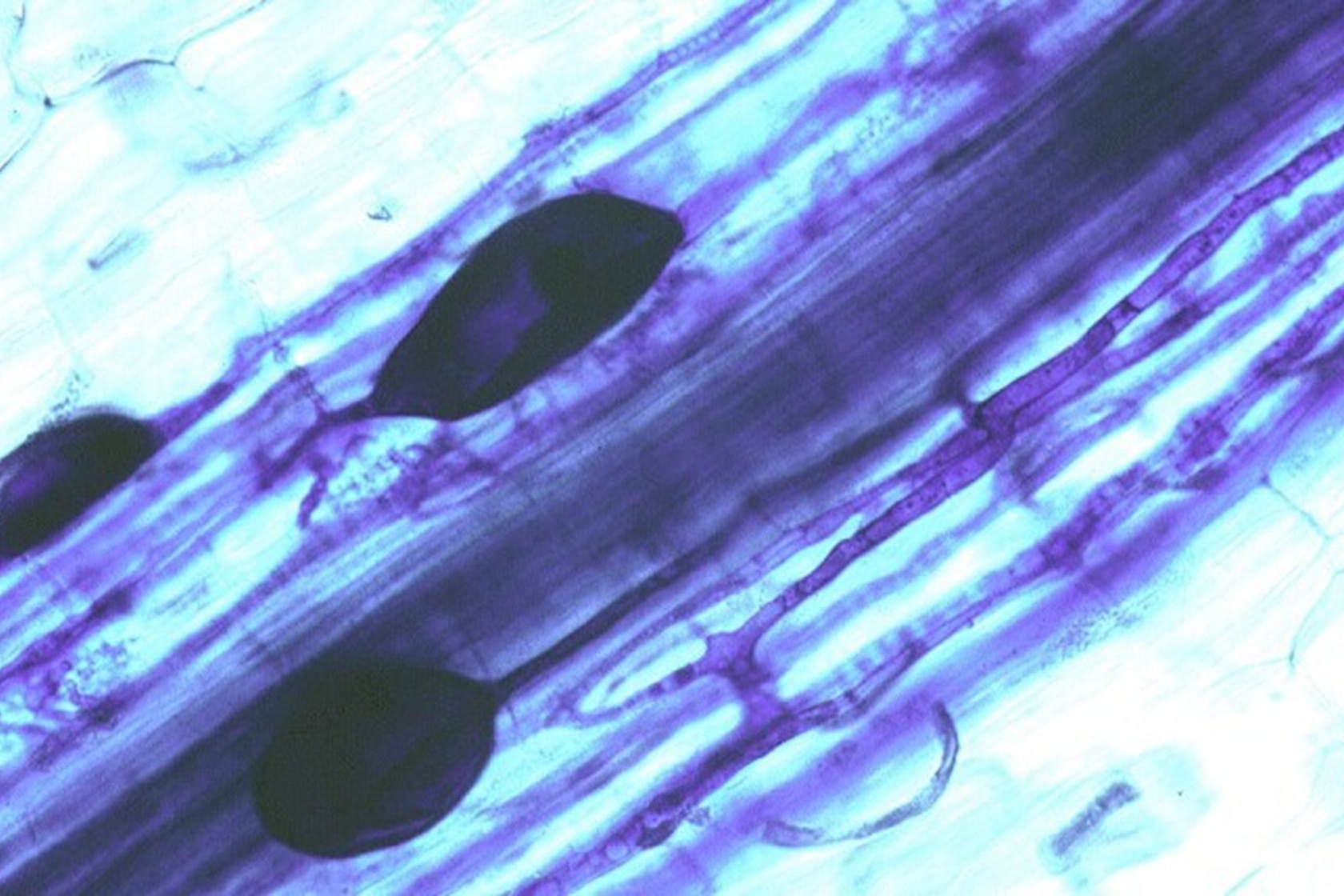
Symbiotic Associations:
Plant root colonized by arbuscular mycorrhizal fungi (blue). 150x.
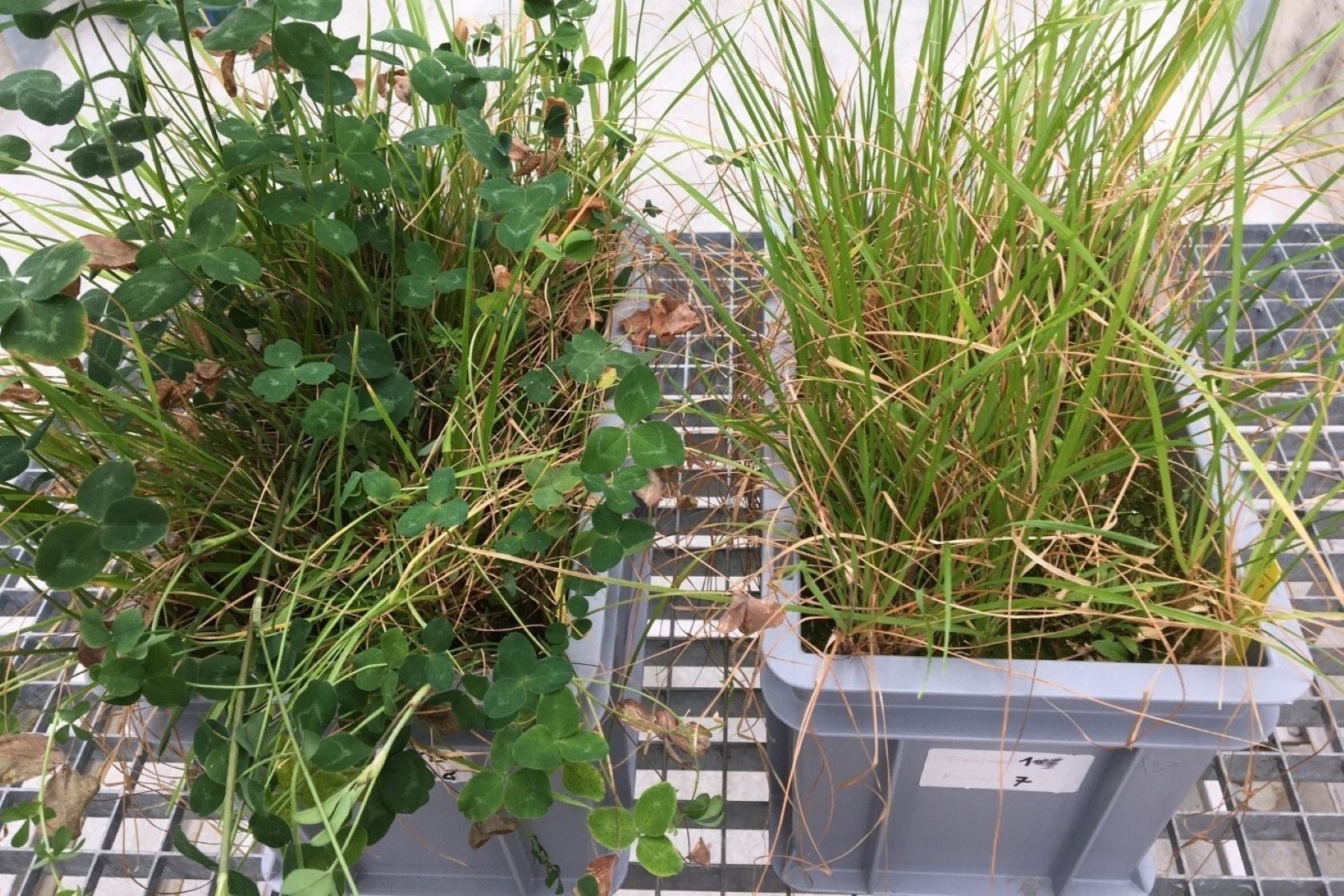
Arbuscular mycorrhizal fungi: The presence of arbuscular mycorrhizal fungi has a strong impact on plant growth and plant diversity. Shown are grassland microcosms where arbuscular mycorrhizal fungi are added to a plant community planted in sterilized soil (left box) or the same plant community in a box without added arbuscular mycorrhizal fungi (right box). This is an ongoing experiment with 110 experimental microcosms, established in 2016, where the number of added mycorrhizal fungi varies from zero to 10 different taxa.
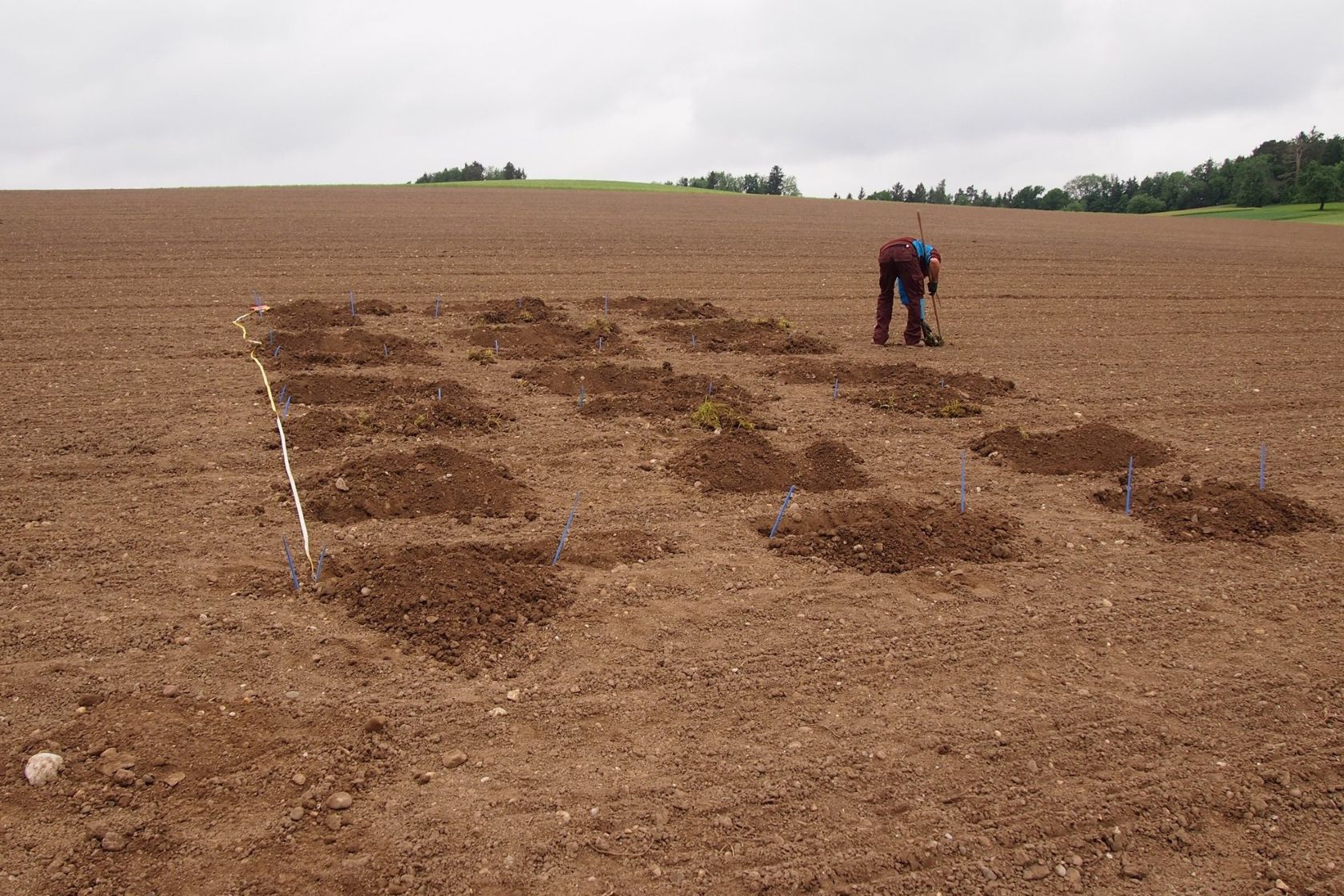
Field inoculation experiments to enhance sustainable plant production.
In replicated field experiments we test whether the addition of arbuscular mycorrhizal fungi can be used to improve plant productivity and reduce fertiliser input.